Teacher-supervised, hands-on learning ideas for Australian classrooms.
Looking for new ways to keep students engaged and learning? Used with close teacher supervision, water beads can be a colourful resource for hands-on learning in primary and secondary classrooms. Here are five creative ways to bring water beads into your teaching toolkit.
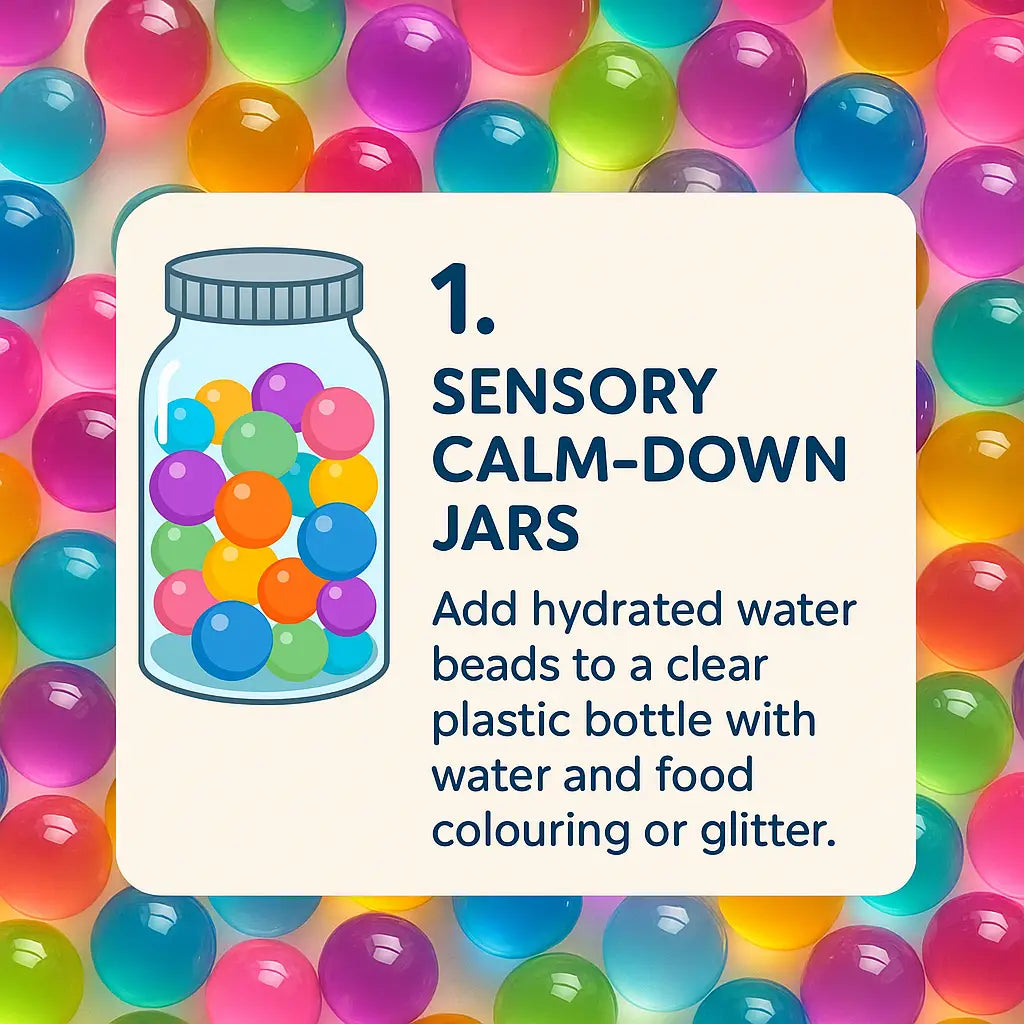
1. Sealed Calm-Down Jars
The teacher adds hydrated water beads to a clear plastic bottle with a bit of water and a few drops of food colouring or glitter, then glues the lid shut so the bottle stays sealed.
- Use these jars in a quiet space for self-regulation and calming.
- Encourage students to breathe slowly as they watch the beads move.
Perfect for wellbeing corners, or as part of SEL programs.
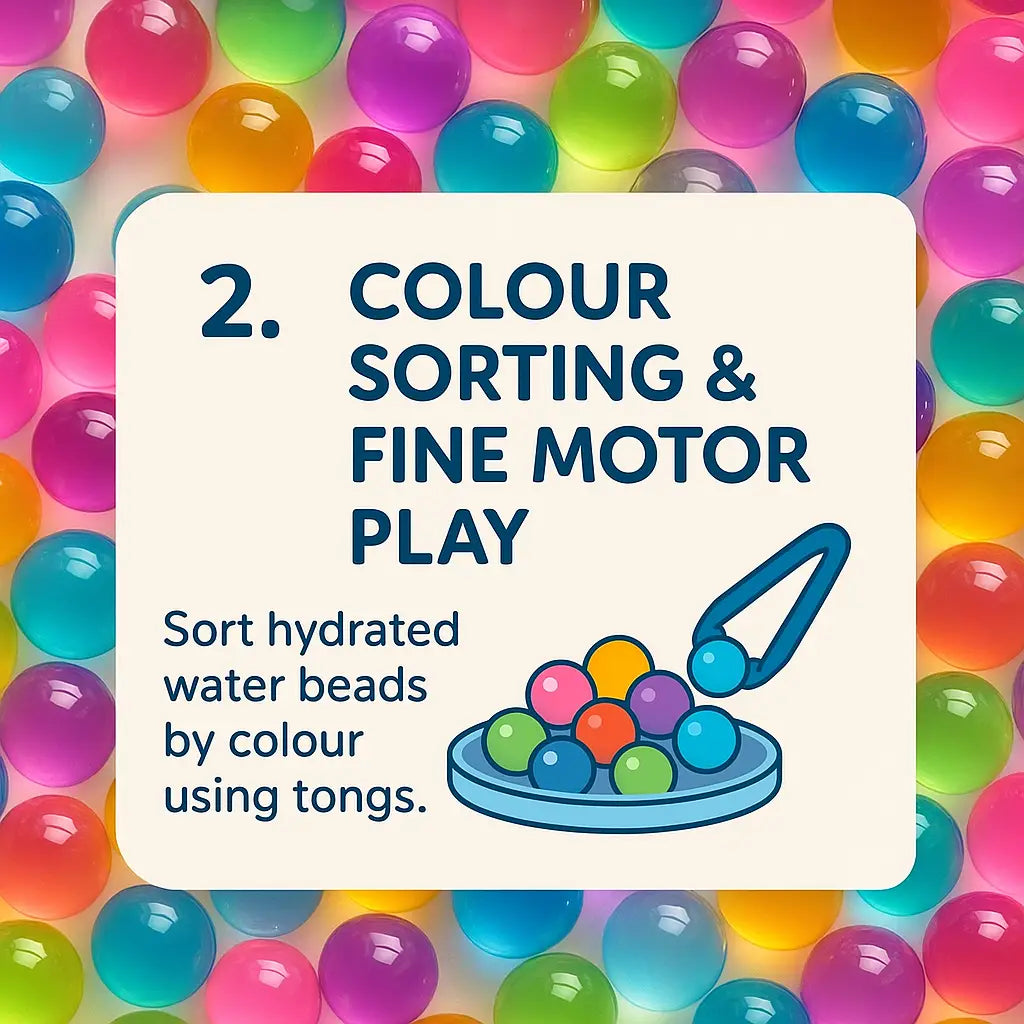
2. Supervised Colour Sorting & Fine Motor Practice
Set up a teacher-supervised station with a counted tray of mixed-colour water beads, plus tongs, scoops, and small cups.
- Ask students to sort by colour, using tongs to pick up the beads.
- It builds hand strength, coordination, and pattern recognition.
A great supervised rotation station for primary learners.
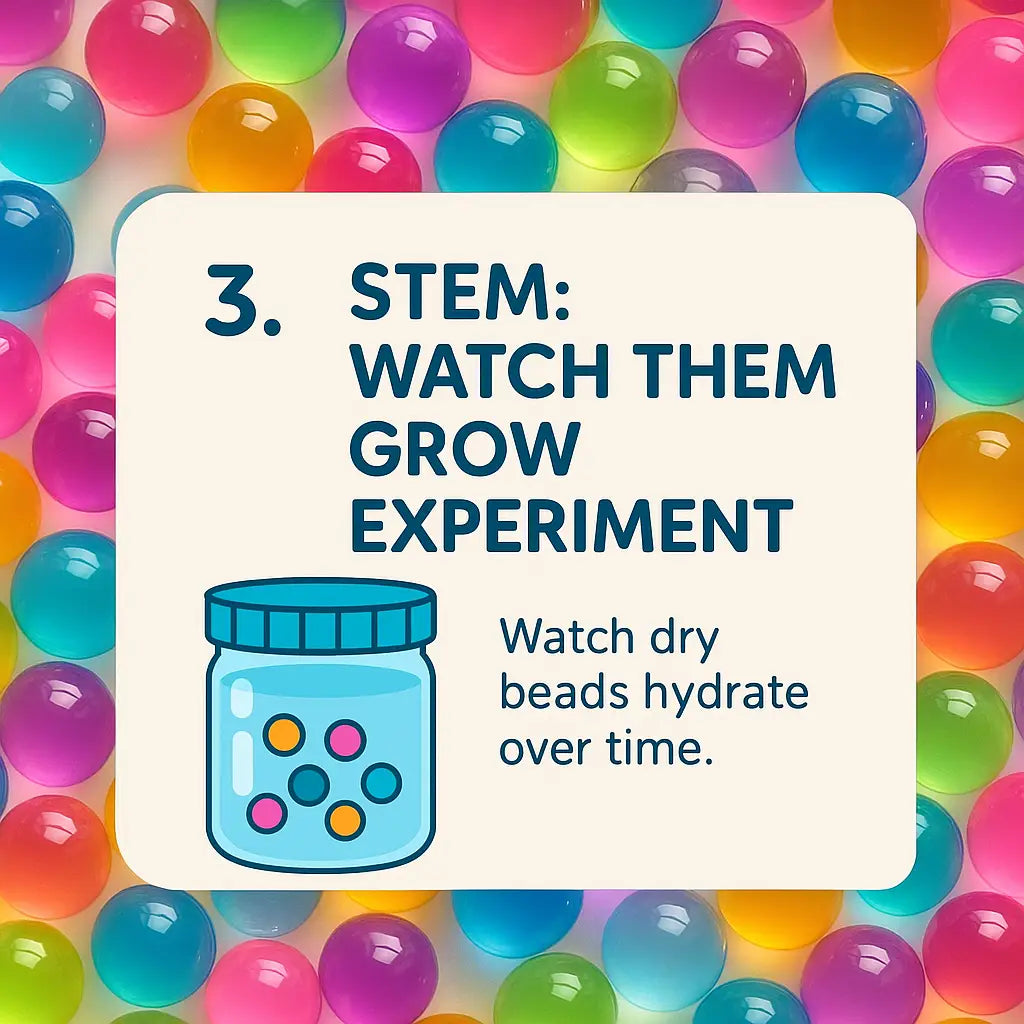
3. STEM: Watch Them Grow Experiment
The teacher hydrates beads in clear containers and let students observe the hydration process over time.
- Ask them to predict how long it will take for the beads to grow.
- Measure and chart bead size every hour or two.
Links beautifully to science units on materials, absorption, and prediction.
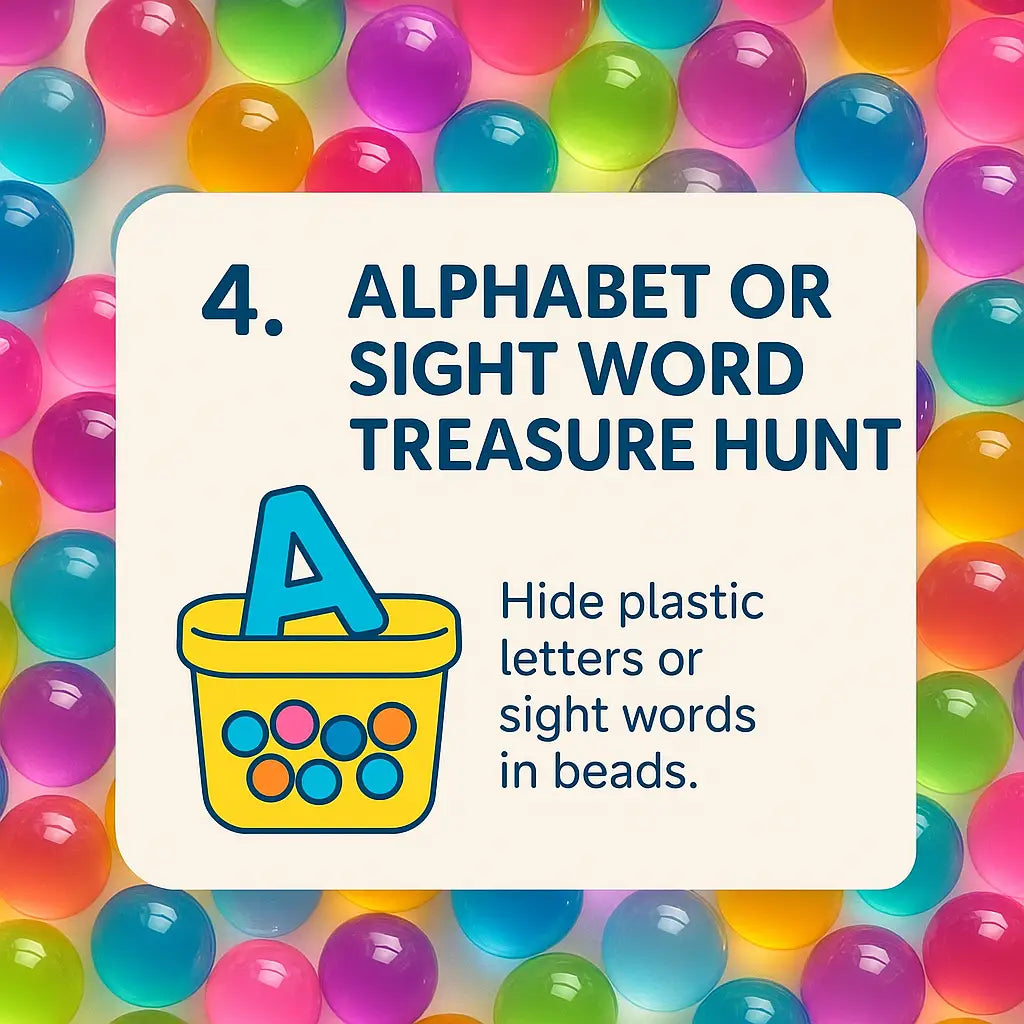
4. Alphabet or Sight Word Treasure Hunt
Under close supervision, hide small plastic letters or laminated sight words in a tub of counted, hydrated beads.
- Students dig through to find a letter or word, then write or use it in a sentence.
- This makes literacy active and tactile.
Perfect for reluctant readers and kinaesthetic learners.
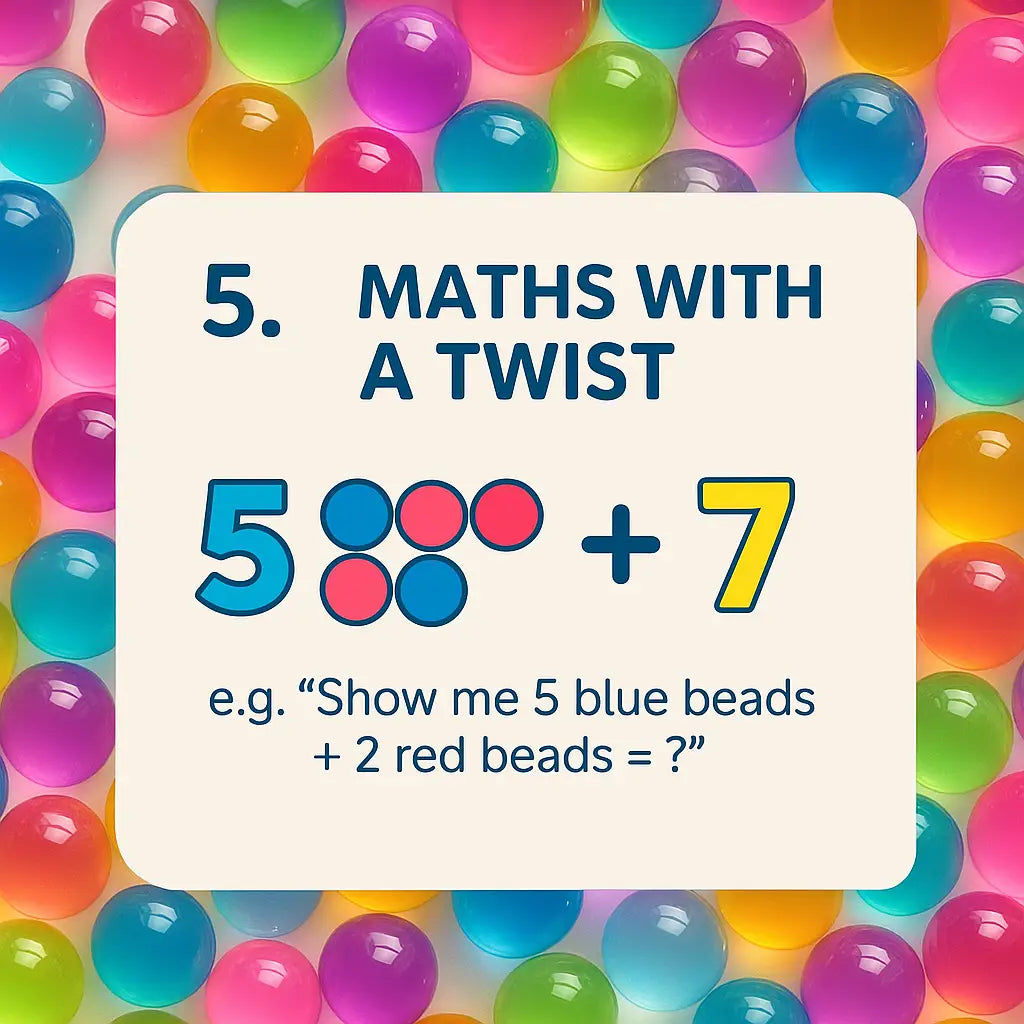
5. Maths With a Twist
Use water beads for counting, patterning, or basic equations.
- For example, “Show me 5 blue beads + 2 red beads = ?”
- Or create repeating colour patterns for students to replicate.
Bring maths to life with a hands-on twist.
Safety First
Always supervise water bead activities closely, and never leave beads with students unattended. Use sealed containers where appropriate, and count beads before and after activities to ensure none are lost.
Water beads are not a toy. Only use them in activities with close, constant adult supervision. Don't use them with infants, toddlers, or any child who may put objects in their mouth, nose or ears, and never send beads home with students. Check your school's policy and risk assessment process first.
Safety: Not a toy. Keep away from children and pets. Swallowed beads can cause a blockage. If swallowed, call the Poisons Information Centre on 13 11 26.